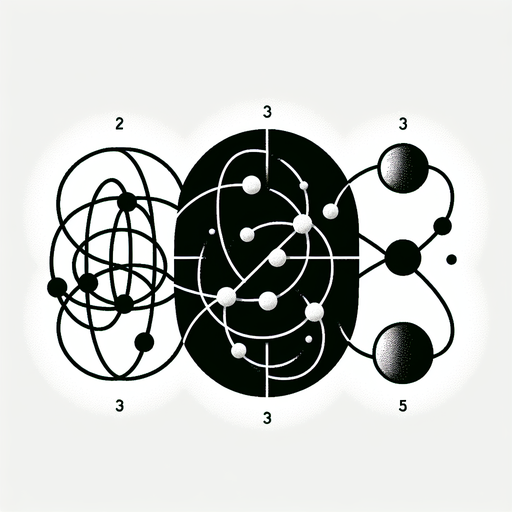
Entropy is a fundamental concept in physics. It represents the degree of disorder or randomness within a system. Simply put, the more disordered a system is, the higher its entropy. This concept is a cornerstone of the second law of thermodynamics, which asserts that entropy in a closed system can only increase over time.
Imagine a hot cup of coffee in a cold room. At first, the coffee is hot, and the room is cold - a condition we consider low-entropy because the temperature is distinctly distributed. But as time passes, the heat from the coffee disperses into the room. Gradually, everything equalizes to the same temperature - a state of high entropy. Why? Because the energy is now widely spread, creating a more random system.
.Now, let's broaden our perspective further, extending the timescale to encompass our planet and the entire universe. The law—that entropy can only increase—holds true at this immense scale as well. In the grand scheme of things, the universe is on a slow march towards uniformity, gradually aligning towards a state of uniform temperature. So, in the cosmic calendar, we're currently living in a chaotic transition period, a mere blip in the relentless spread of entropy.
Interestingly, as human beings, we often favor orderliness. We tend to organize, categorize, and systematize the world around us. Yet, entropy offers a compelling lesson. It reminds us that the universe's natural tendency is towards randomness and dispersion, not towards the neat categories we so often prefer.
Craving more? Check out the source behind this Brain Snack!