Vanished Summer
How One 1815 Eruption Disrupted Food
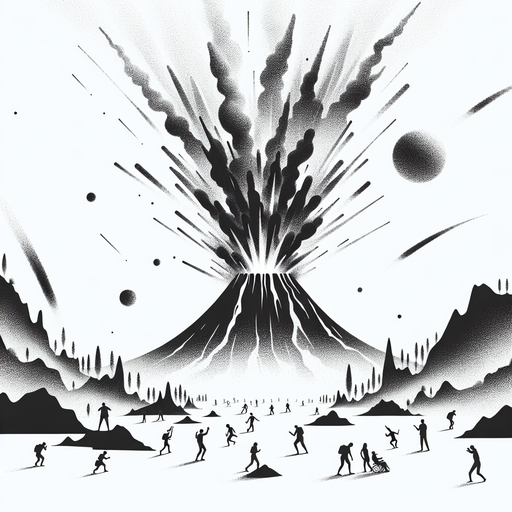
In April 1815, Mount Tambora on Sumbawa exploded so violently that people more than 1000 kilometers away thought they were hearing cannon fire. On April 10-11, the volcano blasted ash and sulfur high into the atmosphere, where sulfate aerosols reflected sunlight for months. That dimmed the planet enough to scramble weather far beyond Indonesia. A local eruption became a global shock to harvests, prices, and daily life.
Tambora first roared on April 5, 1815, then peaked five days later. Thomas Stamford Raffles, the British lieutenant-governor of Java, gathered reports describing villages erased, fields ruined, and hunger spreading across Sumbawa and nearby islands. British officials at first mistook the blasts for military action, which shows how hard the scale was to grasp in real time. By 1816 and 1817, the Northern Hemisphere was dealing with its own consequences: June frosts, relentless rain, failed harvests, and food riots.
What changed next was not only the climate, but the logistics of survival. In New England, Vermonters traded a strong maple syrup crop for fish and ate so much mackerel that some places called 1817 the “mackerel year.” At the same time, bad weather and booming grain demand helped drive settlers west, inflating creating the first U.S. real estate bubble. Farther away, climate disruption in Bengal has also been linked to a new cholera strain spreading beyond India into Burma and Thailand, showing how one eruption could alter diets, migration, and disease at once.
Tambora also left a cultural afterimage. The dark, wet summer of 1816 in Europe helped trap Mary Shelley, Lord Byron, and their circle indoors near Lake Geneva, where Shelley began the story that became Frankenstein in 1818. Two centuries later, Tambora still matters because it links geology to migration, supply chains, and culture in one clear chain of cause and effect. When climate shocks hit food systems, societies do not just suffer them; they reroute trade, move people, and remake everyday life.
Craving more? Check out the source behind this Brain Snack!