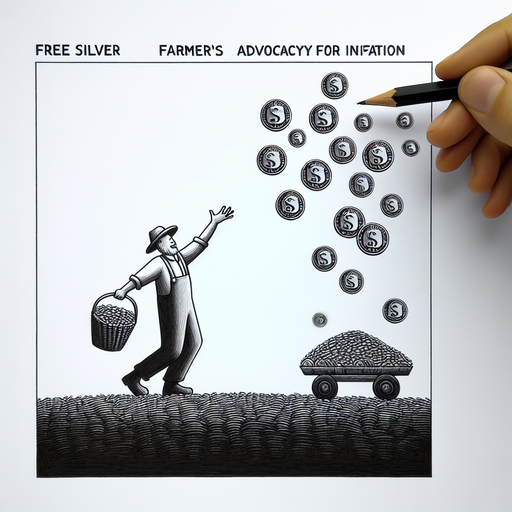
Inflation is typically seen as bad for people, with its associated rise in prices of common goods. But in late 18th century, farmers in the USA were asking for more inflation. This was at time when the US had abandoned the bimetallic standard in 1873, where both silver and gold was used to back the US Dollar, to move to a de facto gold standard.
The move created a deflationary pressure in the economy created financial struggles particulararly for farmers, stemming from low agricultural prices and high levels of debt. The root of their problem lay in the gold standard which, although it provided strong currency stability favored by bankers and industrialists, also led to deflation. Deflation increased the real value of debt, making loans more expensive to pay off over time. As prices for crops fell, farmers' incomes shrank, but their debts remained nominally the same, effectively increasing their financial burden.
The farmers situation led them to support the inclusion of silver in addition to gold as a basis for the dollar—a move they believed would cause inflation. Inflation, in contrast to deflation, would decrease the real value of their debts (making them easier to pay off) and potentially raise agricultural prices, improving their income. This economic pressure gave rise to the "Free Silver" movement, which championed the unlimited coinage of silver to expand the money supply and induce inflation.
This became one of presidential election of 1896 became a pivotal moment for this debate, with William Jennings Bryan representing the pro-silver faction and William McKinley the gold standard advocates. Despite his efforts, McKinley won the election, and the U.S. solidly remained on the gold standard until it was further consolidated by the Gold Standard Act of 1900, but debates about economy and inflation would keep coming in future elections.
Craving more? Check out the source behind this Brain Snack!