For most of human history, people trusted divine stories and inherited authority to explain why the world worked the way it did. If storms came, gods were angry; if seasons shifted, cosmic powers had decided it. In 6th-century BCE Miletus, Anaximander broke from that pattern. He treated nature as something that could be reasoned about, modeled, argued over, and revised. That shift is why he is considered an early pioneer of scientific thinking.
At the time, early thinkers often tried to explain the world by identifying one basic earthly element behind everything. Thales, Anaximander’s teacher, argued that element was water. Anaximander thought that was too narrow: no familiar element could fully account for opposites like hot and cold or wet and dry. So he proposed the apeiron, the boundless and indefinite source from which opposites emerge and to which they return in balance. The details were speculative, but the move from a concrete element to an abstract principle was a major leap in method.
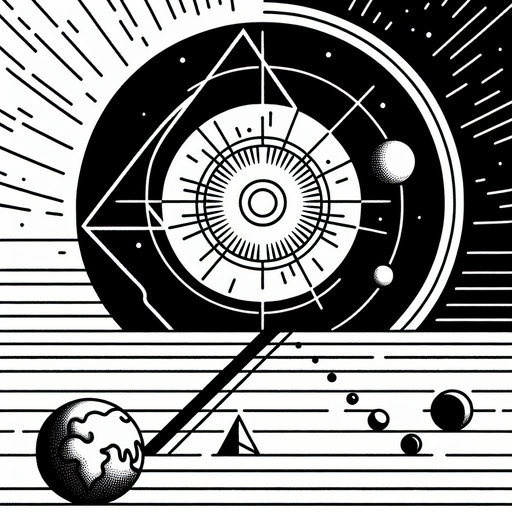
He applied the same style of reasoning to cosmology. Instead of placing the Earth on water or pillars, he imagined a free‑standing Earth, shaped like a short cylinder, with people living on its upper surface. It remains in place, he argued, because it is centered and has no reason to move in one direction rather than another. This was a profound break: if Earth needs no support, then “below” is not a cosmic floor, and space can exist beneath us as well as above us, opening the way for later thinkers to imagine a truly spherical Earth.
Science is not a museum of perfect first answers; it is a long chain of better questions, clearer models, and honest correction. By treating ideas as revisable and nature as intelligible, Anaximander opened the path that later runs through Aristotle, Copernicus, Newton, and beyond. Anaximander’s greatest discovery was not a fact about the cosmos, but a new way to think about it.Go deeper: Anaximander: And The Birth Of Science - Carlo Rovelli
Craving more? Check out the source behind this Brain Snack!