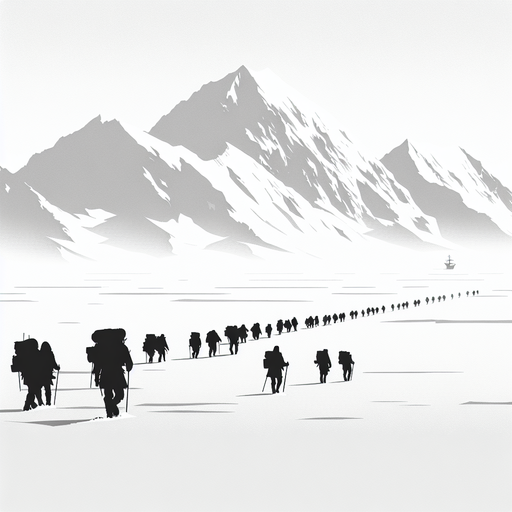
In 1799, a Prussian aristocrat boarded a ship bound for South America, using his inherited fortune to pursue a curiosity about nature. His name was Alexander von Humboldt, and at a time when most explorers sought gold or glory, he set out to weigh mountains, chart rivers, and record every flower, rock, and insect he could find. His expedition would last five years, stretch across 9,000 kilometers, and leave the world with a radically new way of seeing nature.
Humboldt’s journey began in Spain, where he convinced the king to grant him passage to the Spanish colonies, an extraordinary privilege, given how tightly Spain guarded access. With his friend Aimé Bonpland, a French botanist, he sailed to Venezuela, climbed volcanoes in the Andes, paddled down the Orinoco, and trekked through dense jungles teeming with dangers. Their packs bulged with barometers, compasses, and specimen jars, a mobile laboratory for them to explore.
The expedition produced discoveries at every turn. Humboldt showed how plants change with altitude, sketching a striking picture of life rising from jungle to snowcap. He revealed that the mountains of South America and Europe were born in the same ancient upheavals, linking the Andes to the Alps. He climbed Chimborazo in Ecuador, then thought the world’s tallest mountain, and nearly suffocated at 6,000 meters, more than 1,000 meters higher than the highest peak of Europe.
When Humboldt returned to Europe in 1804, he brought back more than sixty thousand plant specimens, astronomical readings, and cartographic treasures. But above all, he carried above all a radical realization: that nature and humanity form a single, living web, and that a continent’s true wealth lies in these patterns of life, not its mines or plantations.
Craving more? Check out the source behind this Brain Snack!